Before you begin
I have learned to pay attention to how a difficult question is asked. Curiosity makes room for an answer; a demand can make the other person feel they are already being judged. You can be clear about what matters to you while still wanting to understand the person in front of you.
Begin with a conversation you can both take part in
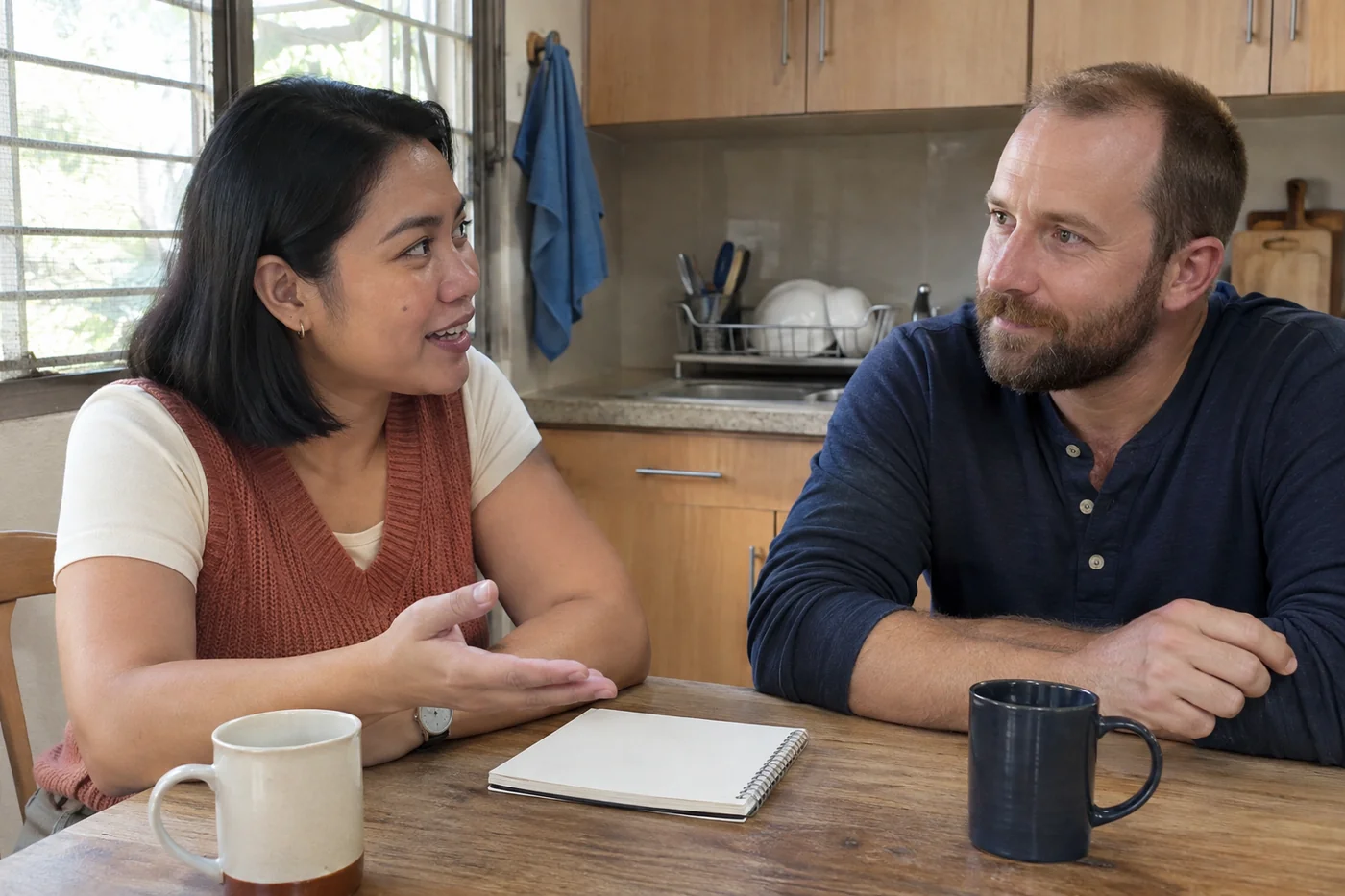
Choose a time when neither person needs to rush. Agree on one topic first, rather than treating this guide as an interview to complete in one sitting. Each person should answer, ask follow-up questions and have the option to pause.
Try opening with: “I want us to understand what marriage would mean in everyday life. Could we start with where we would live, and what each of us needs there?”
Look for understanding before agreement. If your partner gives an answer you did not expect, ask what experiences or wishes sit behind it. A quick “fine” can end the conversation without settling the question.
The Gottman Institute’s guide to conversations before marriage also encourages open questions and listening with curiosity. The questions below are a practical way to begin your own discussion.
Ask about children and the family life you imagine
Start with whether each of you wants children, rather than assuming marriage answers that question. Then discuss timing and the kind of home you would want to create.
- Do we each want to become parents, and what if one of us does not?
- What would we need in place before trying to build a family?
- How would we share care, paid work and time to ourselves?
- Which languages, beliefs or family customs would we want children to grow up around?
- If our plans became harder or changed, how would we make room to talk about it?
You do not have to predict every future event. You do need to hear an important difference without quietly assuming your partner will change. A wish for children is not a promise that someone else will eventually share it.
Make money and work specific enough to understand
“We will be sensible with money” can mean completely different things to two people. Talk about the decisions that sentence would have to cover.
Ask what income, debts and ongoing commitments each person would bring into the household. Discuss who would pay which expenses, whether you want shared or separate accounts, and which spending decisions need a conversation first. The aim is a clear picture, not access to one another’s passwords.
If either person regularly helps relatives, discuss what that support means, how it fits the household budget and what would happen in a difficult month. Ask about your partner’s actual commitments, rather than assuming them from nationality or family background.
Work deserves its own space. What would a move mean for either career? Would one person study or retrain? If one of you earned less for a while, how would both retain a voice in decisions?
Useful next question: “What would an ordinary month look like with the income and responsibilities we actually have?” Financial or legal questions about your particular situation can then go to an appropriately qualified professional; do not fill an important unknown with a guess.
Describe home as a place to live, not just a country
For an American and a Filipina considering marriage, a country name is only the beginning. Discuss the neighbourhood, transport, workday, support network and opportunities for each person to build an independent routine.
Ask: “If we lived there, what would a normal Tuesday look like for each of us?” Include chores, cooking, quiet time, visitors and time with friends. Who carries the work that nobody has written down?
Then consider an alternative. If you could not live in your first-choice location, would there be another option both would genuinely accept? My guide to meeting for the first time covers an earlier stage; a shared home needs a deeper decision than a successful visit.
A place should work for both lives. Being the person who already knows the language or earns the income should not automatically give someone the final say.
Talk about relatives, faith and decisions that stay between you
Ask which family relationships each person wants to maintain, how often you would visit, and what role relatives would have when you face a major decision. Be specific about privacy: what can be shared with family, and what requires checking with each other first?
Faith and traditions can also affect ordinary life. Ask what practices matter, which celebrations you want to keep and whether either person expects the other to participate. Leave room for “this matters to me” and “I would not be comfortable doing that.”
My family-introduction guide helps prepare a first hello. This conversation goes further: how will you keep family connections while making your own choices as a couple?
Discuss disagreement before you need a perfect answer
Ask what helps each of you talk when upset, how you would request a pause and how you would return to the subject afterwards. A pause needs a plan to reconnect; otherwise a difficult question can simply disappear.
Try a small, real example: “If we disagreed about paying for a family visit, how would we work through it?” Listen for a process that gives both people a voice. Insults, threats, pressure or fear deserve attention in their own right; a conversation worksheet cannot make those behaviours acceptable.
Ask about affection, physical closeness and privacy in terms each person is comfortable discussing. Nobody should have to trade away consent or personal boundaries to demonstrate commitment.
Being ready to marry does not mean agreeing on everything. It does mean being able to name differences honestly and decide whether the life being proposed is one you both want.
Turn the open questions into a next conversation
Use the free decision map below after one discussion. It has space for each person’s view, what is genuinely agreed, what remains open and the information you still need. Choose one next conversation with a time you both accept.
Do not tick “agreed” because you are tired of the subject. Write “open” if that is the honest answer. If a fundamental difference remains, return to your relationship non-negotiables rather than planning a wedding around the hope that it will disappear.
You can leave today with one useful result: a question you both understand, and a real plan to answer it. That is a much stronger starting point than a folder full of questions neither of you has had the chance to answer.
Something to use today
One question. Two honest answers.
Turn one important marriage conversation into a visible agreement, open question and practical next step.
Each person fills one side, compare your answers, then record what is agreed, what needs information and when you will return to it.
A little clarity for your next step.
Explore the personal introduction process
Mélih
I bring foreign men and Filipina women together through private introductions and personal guidance. Get to know me.