Before you begin
“Someone who shares my values” sounds clear until you have to explain what sharing those values would look like on a normal Tuesday. The useful part is the explanation behind it. A long list can tell someone what to qualify for; a thoughtful explanation helps you both see whether your lives could fit.
Give an essential a reason
Begin with something that matters to you and ask why. Do you want children? Need a partner who respects your faith? Know that you cannot relocate because of a responsibility at home? Write the reason before deciding how to describe the criterion.
A non-negotiable is about a relationship you can choose honestly. A preference is something you like, with room for another way. An open question needs more thought or a real answer from the person you are getting to know.
For example, enjoying the same hobbies may be a preference. Having room to keep your own friendships and activities could be an essential. Those two wishes can sit together without requiring a partner to share every interest.
Put the need beneath the preference into words. “We must love the same music” might become “I'd love us to share some interests, and I need us to respect the things we each enjoy separately.” You may keep the original preference; you simply understand what it is doing on your list.

Look for the everyday meaning of your values
A value is easier to discuss when you can explain what it asks of both of you. “Honesty,” “family” and “commitment” can mean different choices to different people. Try moving from the broad word to a conversation you could actually have.
| Broad wish | A clearer question to explore |
|---|---|
| Honesty | Can we speak plainly about our intentions and acknowledge when we do not know yet? |
| Family | What responsibilities do we each have, and how would they affect time, money or where we live? |
| Commitment | Are we looking for the same kind of relationship, and what would we need to agree before exclusivity? |
| Faith | Which practices matter in daily life, and what would each of us expect from a partner? |
These questions are starting points. Choose the ones that belong to your life, rather than treating the table as a universal list of dating non-negotiables.
In my introduction process, I consider values, family plans and everyday life alongside what each person hopes to build. The detail helps me understand the direction, and it gives the two people something meaningful to discuss for themselves. It does not turn a shared label into a promise of compatibility.
Separate a boundary from a demand
A boundary explains what you are comfortable participating in and the choice you will make. A demand tries to remove the other person's choice. Notice the difference between “I want a relationship where we can discuss concerns respectfully” and “You must never disagree with me.”
The relationship support service love is respect explains that setting boundaries includes expressing needs, goals and limits while respecting the other person's boundaries too. Bring that same room for choice into your own conversation.
For example, if you need an exclusive relationship, say what exclusivity means to you and ask whether they want it. A need can be firm without becoming an instruction to change. They may want something else. That answer can tell you that the relationship is not a fit, without making either person's preferred future a fault.
Respect, consent and freedom from intimidation deserve attention in their own right. Do not trade away a personal limit because someone treats it as proof that you do not care enough.
Be honest about plans that could take you in different directions
Children, marriage, where to live, faith and family responsibilities can shape the future you are considering. You do not need every detail settled on a first date. You do need to avoid presenting a known difference as though it will automatically disappear.
If you know you want children, “perhaps they'll change their mind” is not a shared plan with someone who says they do not. If you cannot relocate, make that clear before either person starts imagining a move as the obvious next step.
For a US–Philippines connection, explain the life you could realistically offer as well as the life you hope for. Ask about the other person's commitments without treating nationality as an answer. The guide to dating a Filipina explores ways to ask about family and future plans as individual questions.
An unanswered point is allowed to stay open. Give it a question and a time to revisit, rather than quietly filing it under “we agree.”
Bring one important point into the conversation
You do not have to read out your whole list. Start with the point most relevant to the step you are considering. Offer your own answer first, explain why it matters and ask how the other person sees it.
Adapt a sentence such as: “I'm hoping for a relationship that could lead to marriage. I don't need us to decide anything now, but I'd like to understand what you're looking for.” Then listen beyond the answer you hoped to hear.
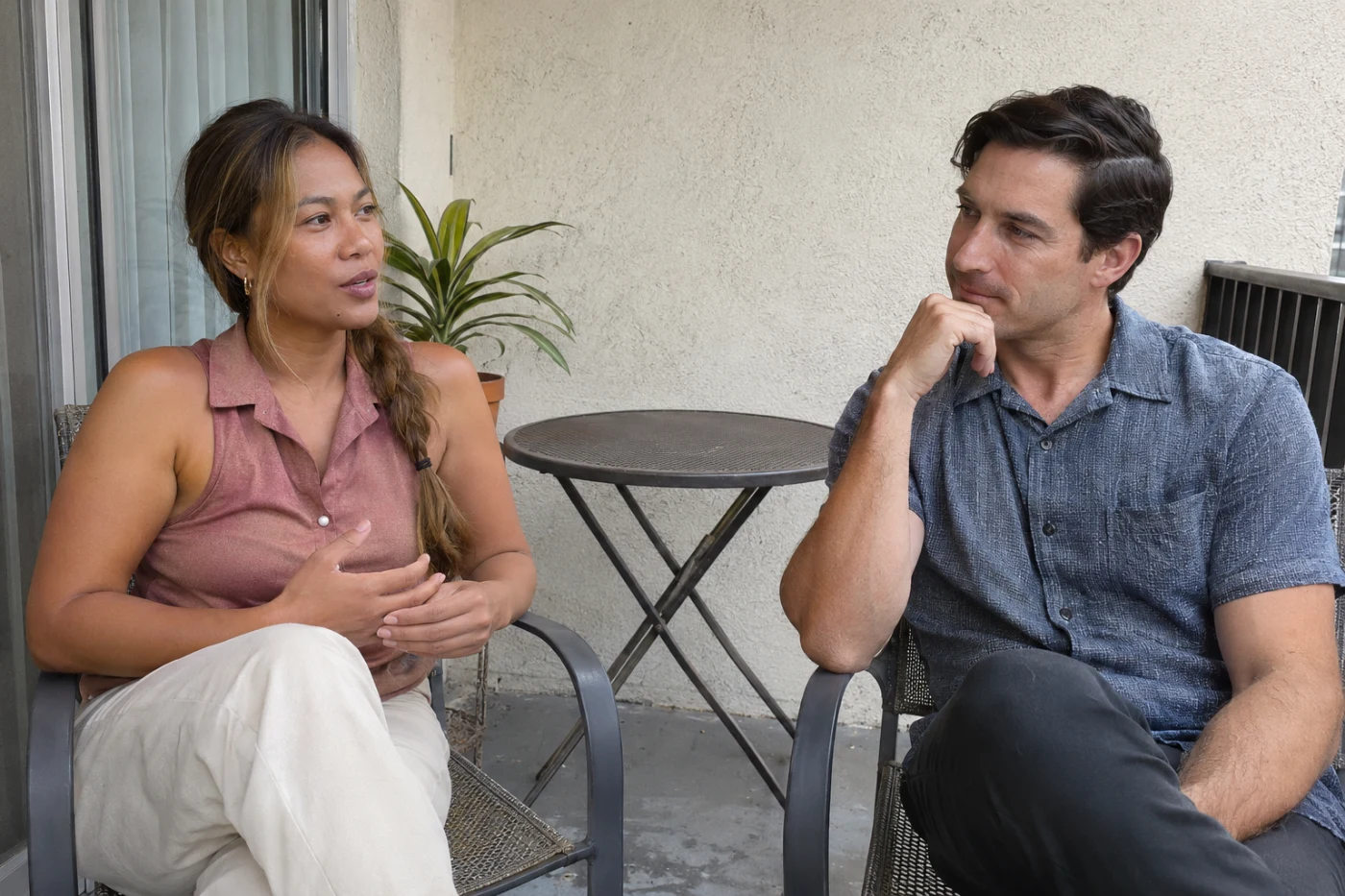
Pay attention to both words and choices over time. One good conversation is a beginning. If the answer remains vague, ask a specific follow-up instead of completing the story yourself. The guide to intentional dating can help you express your direction without turning an early conversation into a commitment.
Use the answer, even when it is disappointing
When a difference appears, ask yourself what it actually changes. Is this a preference you can freely loosen? A detail you need to understand? Or an essential you would be giving up in the hope of keeping the person?
You can revise your list when you understand yourself better. Changing your mind should be your choice, rather than the price of getting someone to stay. Equally, leave the other person free to keep a different answer.
A kind response might be: “I appreciate you being clear. That future matters to me, so I don't think we should continue romantically.” You do not need to prove whose wish is more reasonable before choosing a different path.
Turn your list into a conversation you can use
Use What matters, and why below to work through three criteria. For each one, choose essential, preference or still open; add the reason and one everyday example. Finish by turning a single essential into a question you can actually ask.
The PDF gives you a sorting tool, rather than a ready-made list of qualities to expect from somebody else. Start with three points and leave space to learn more.
If you want me to understand what matters before considering a private introduction, the free questionnaire begins that conversation. Share your priorities in your own words, including the parts you are still working out. A clear starting point is helpful; a perfect script is unnecessary.
Something to use today
What matters, and why.
Separate essentials, preferences and open questions, then turn one important need into a conversation you can have.
Choose essential, preference or still open. Give a reason and an everyday example for three points from your own life.
A little clarity for your next step.
Explore the personal introduction process
Mélih
I bring foreign men and Filipina women together through private introductions and personal guidance. Get to know me.