Before you begin
The same care matters when a Filipina partner meets an American family. She should be able to ask questions, explain herself in her own words and know that you will support the boundaries you discussed.
In my work, I begin with what both people want from an introduction. I would bring that same attention to a family meeting: what would make this first hello comfortable for each of you?
Start with a conversation between the two of you
Before asking what the family might expect, ask your partner what they want the meeting to mean. Is it a short hello, a meal together or a chance to share that the relationship is becoming important?
You may each attach a different meaning to the invitation. Say that meaning out loud before allowing a dinner invitation to announce a decision you have not made together.
A useful opening is: “What would you like your family to understand about us after this first meeting?” Then ask what would feel too much, too soon.
Make a small plan together:
- People: Who is expected, and will anyone join by video?
- Names: What does each person prefer to be called?
- Format: Where will you meet, and about how long will you stay?
- Privacy: What are you both happy to discuss?
- Support: How will you help each other if a question feels uncomfortable?
You can use the family introduction map below to put your answers in one place.
Meeting Filipino parents: let your partner guide the greeting
My French instinct, the first time I greeted an older person in the Philippines, was to offer a firm handshake. Their hand stayed relaxed, and I had a brief, rather awkward moment before someone gently explained mano po.
I wanted to understand the gesture before using it myself: showing respect and asking an elder’s blessing. What stayed with me was how kindly people handled my mistake. It taught me to ask before the greeting, rather than rely on the habits I brought from France.
Ask how this particular family likes to greet people. Your partner can explain the names, titles or gestures that feel natural at home, and you can ask for help with a pronunciation.
Cultural Atlas describes how age and relationship influence Filipino greetings and forms of address. Treat that as a reason to ask about the people you are meeting, rather than a script to perform.
You might say beforehand: “Would your mum prefer that I use her name or a title? Please help me if I get it wrong.” A sincere question gives your partner room to explain a preference.
Ask about the visit itself too. If you would like to bring something, find out what the host would appreciate. A modest gesture that fits the household can be chosen without making an expensive impression.
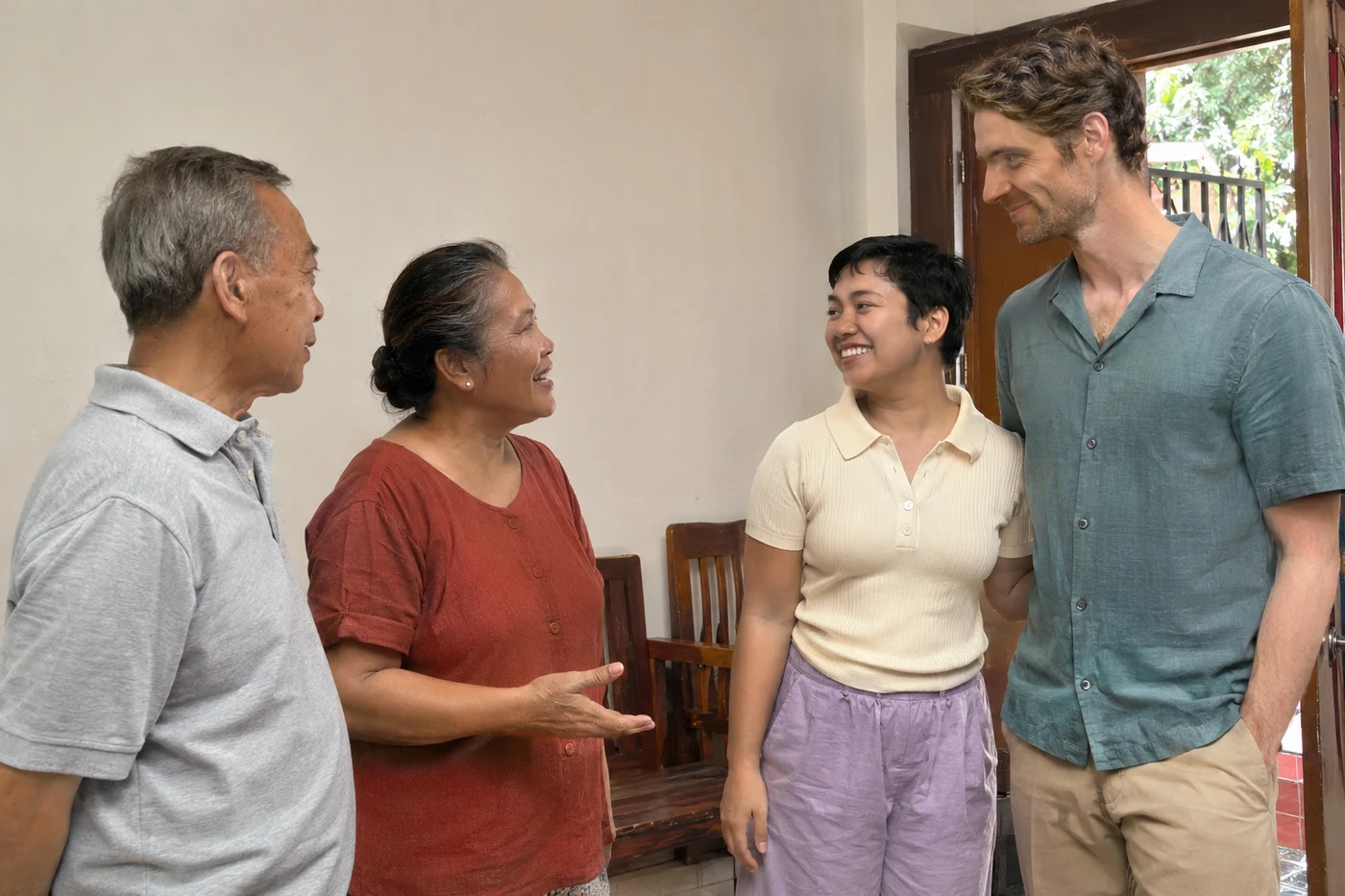
During the introduction, let your partner tell you who each person is. Greet the people present, give them time to reply and allow the conversation to find its pace.
If you do not understand a question, ask for it to be repeated or explained. You can be interested and respectful while still learning names and words.
Introducing a Filipina girlfriend to your American family
Prepare your family as thoughtfully as you prepare your partner. Share the details she has agreed to share, including her name and what she would like people to know about her.
You can introduce an interest that belongs to her: the work she enjoys, a hobby or something she has chosen to tell them. Let the introduction include who she is, beyond where she comes from.
Ask your family to leave space for her own answers. You can help with a name or explain a reference without answering every question on her behalf.
If she would rather begin with a short call than a full family dinner, discuss that option. The first meeting can be small enough for everyone to take part.
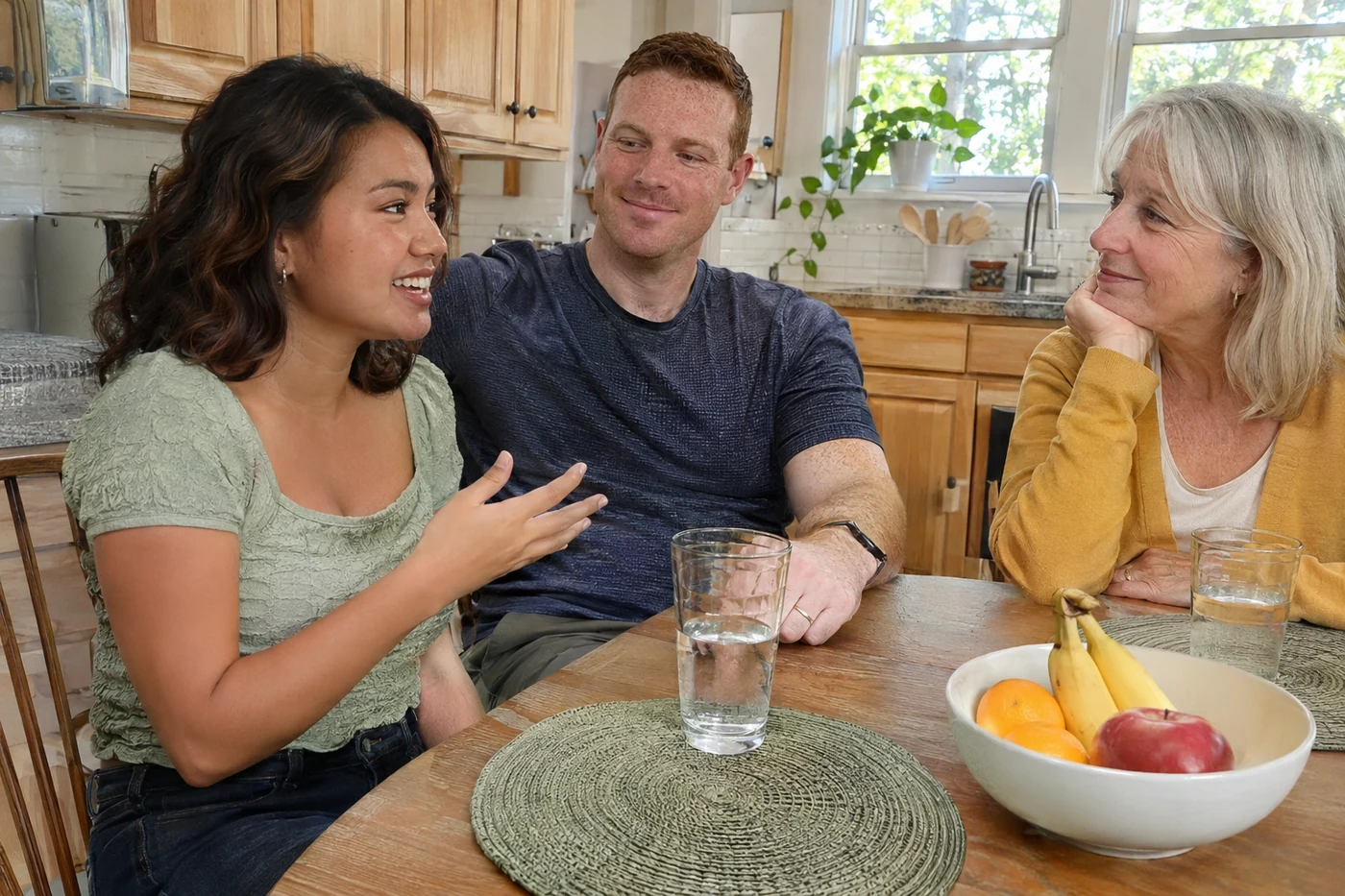
A brief introduction could sound like this: “This is Ana. She wanted to tell you about the pottery class she’s been enjoying. Mum, I told Ana you like making things too.”
Adapt the words to a real interest your partner has chosen to share. Then give her and your family a chance to speak to each other directly.
Agree on what stays between you
Before meeting either family, discuss what you want to say about how you met, the stage of your relationship and any plans that are still being considered.
Questions about marriage, moving countries, money or children may reach subjects you have barely begun to discuss. You can answer honestly without announcing an agreement you have not made.
Choose a short reply together. For example: “We’re enjoying getting to know each other, and we’re still talking about the practical plans.”
Or: “We’d like to keep the timing between us until we have made a decision.” Use a reply that reflects your actual situation.
If your own relative keeps pressing, take responsibility for responding. Your partner should not have to defend an agreement you made together while you stay silent.
A gentle change of subject can help: “We’ll share more when we’re ready. I wanted to ask you about the photos you mentioned.” Choose a topic the family member genuinely wants to discuss.
Leave a little time for the two of you afterwards
After the visit, ask what felt comfortable and whether anything caught your partner off guard. Listen before explaining what a relative probably meant.
If you missed a chance to help, name it plainly: “I noticed I left you to answer that question alone. I’d like us to agree how I can step in next time.”
A first family meeting gives you things to understand and discuss. You can appreciate a warm welcome, clarify an awkward moment and decide together what a next visit would look like.
If the meeting is part of your first trip to see each other, keep some unhurried time for the two of you too.
Prepare your own family introduction map
Use the page below before the visit. Each person can note preferred names, an interest they would enjoy sharing and a subject they would rather keep private.
Compare the answers and write one introduction you both recognise as true. Add your meeting plan and a phrase you can use if a question reaches a private subject.
You will arrive with a few useful details settled and more room to meet the people in front of you.
Something to use today
Our first family hello
Agree on names, details to share and private topics before meeting either family.
Each person fills one side. Compare your answers, choose a meeting plan and write an introduction and boundary reply together.
A little clarity for your next step.
Explore the personal introduction process
Mélih
I bring foreign men and Filipina women together through private introductions and personal guidance. Get to know me.