Before you begin
Paris is my main place to rest when I am back in France. Travelling has made me take that ordinary need seriously: somewhere to recover, people to stay connected to and a rhythm that allows work to happen. An exciting destination does not answer those questions by itself.
I would bring that same attention to a move for love. Being in the same room can be wonderful. You still need to decide what life in that room would look like.
Decide whether you are ready to make a plan
Before choosing a location, ask whether both people actually want to take this step. A wish to end the travel can sit alongside uncertainty about living together. Give both answers space.
There is no timetable that settles how long a long-distance relationship should last for every couple. A useful timeline names decisions and dependencies, rather than promising a move by a date you cannot yet support.
If you have never met in person, begin with the first-meeting guide before committing to share a home. A visit can help you learn about each other, but a holiday schedule is still different from a normal working week.
Ask what you already know about conflict, responsibilities, finances and time apart. If a major question remains unspoken, make it a conversation before turning it into a moving expense.
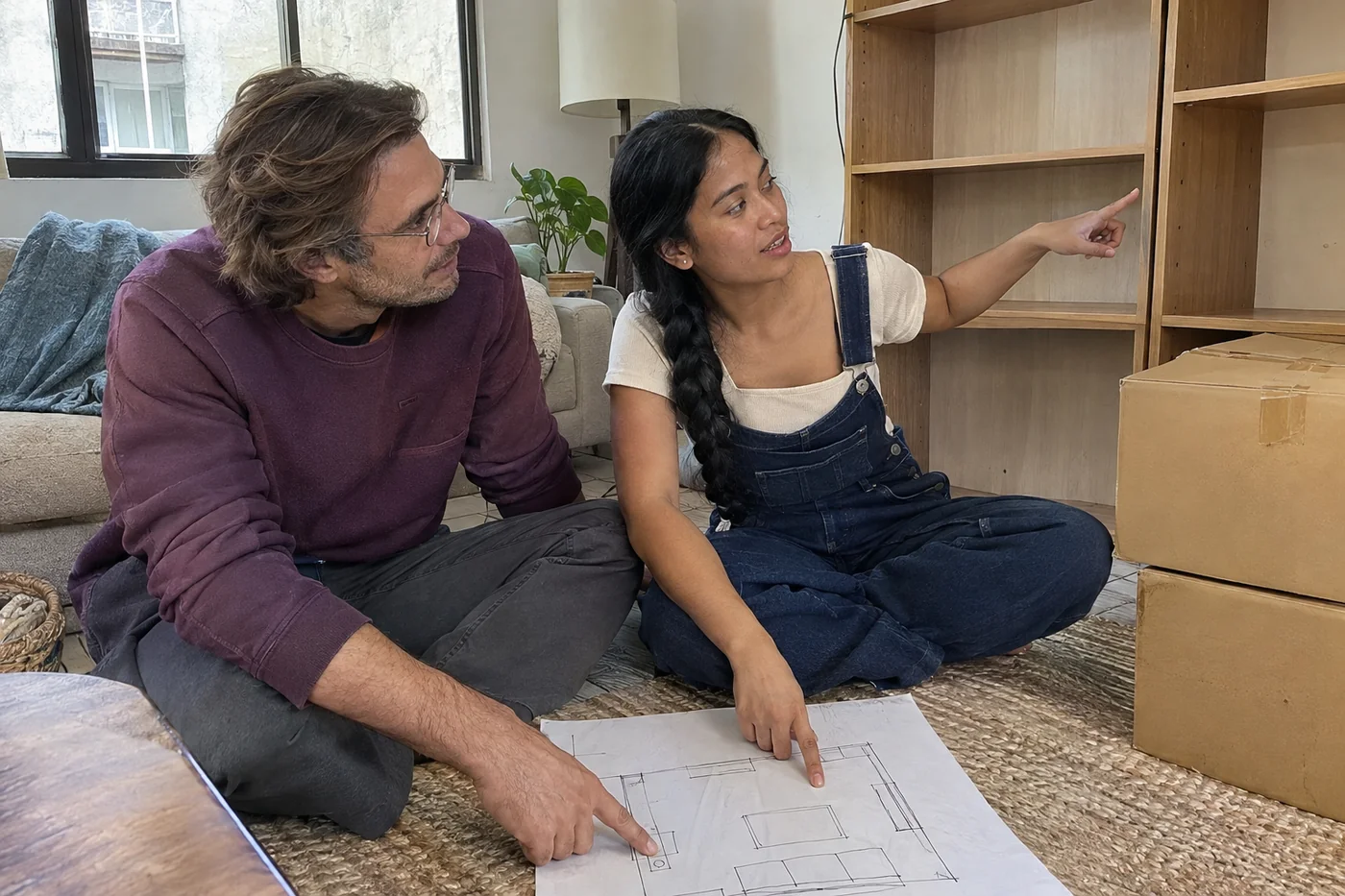
Compare two possible lives before asking who should move
When deciding who should move in a long-distance relationship, avoid starting with “It is obviously easier for you.” Something can be easier for one person and still carry a large cost for the other.
Put at least two realistic options beside each other. One might be living near his current home; another might be living near hers. If neither works, you may need more time or a different plan. A third country is only an option if it is genuinely workable for both.
For each place, ask:
- What could each of us do for work or study, and what still needs checking?
- What would housing and ordinary expenses require from each person?
- Who would have transport, friends and a way to spend time independently?
- How would we stay connected to relatives and people we depend on?
- What would each person be leaving behind?
Count the cost to both lives, including things that do not appear on a receipt: professional identity, language comfort, familiar food, friendships and the ability to go somewhere alone.
Separate a couple’s preference from permission to live and work there
Wanting a place does not establish whether either person can live or work there. Put the questions you need to verify in a separate column, with an official source or qualified adviser appropriate to the situation.
For the United States, USCIS’s Working in the United States information is an official starting point for understanding work-related requirements. Your particular route, eligibility and timing need checking through the relevant official guidance. Do not make an employment promise or an irreversible moving decision from a relationship article.
The same principle applies wherever you are considering living. Keep an unknown visible until you have an answer. A move date based on “we will work that out later” can put one person under pressure when the practical answer turns out to be different.
My introductions do not decide these legal questions for you. This planning exercise helps identify them so you can take them to the right place.
Describe an ordinary week before moving in together
Picture a weekday when nobody is on leave. One person has work, another needs transport, food needs buying and somebody wants a little quiet time. What happens?
Useful questions to ask before moving in together include who handles chores, how shared costs are paid, what space each person needs and how you will organise visitors. Talk about habits that do not seem important until they happen every day: sleep, noise, meals, tidiness and screen time.
Adjusting to living together after long distance includes adjusting to less curated time. You will see each other tired, occupied and unavailable for conversation. Agree how to request space without treating it as rejection.
If one person is staying in the other’s existing home, discuss how that place becomes a home they can both influence. Being invited to move in should include room for preferences, belongings and routines, rather than a permanent guest role.
Protect independence before anyone becomes dependent
Discuss how each person will access their own documents, money, communication and transport. What happens during a period without paid work? How can the person who moved make choices without asking permission for every ordinary expense?
Maintaining independence after moving for a partner should be part of the plan from the beginning. Think about language learning, study, work possibilities and a personal network. Being the local partner means having knowledge to share, not authority over the other person’s life.
For an American and a Filipina, the person adapting to a new place could be either of you. Ask who will need support in the location you are actually discussing, rather than assigning those roles from nationality.
If money, housing or immigration uncertainty makes it difficult for someone to say no freely, slow the decision down and seek appropriate independent support. A shared plan needs room for a real choice.
Make room for missing home after the move
Someone can want the relationship and still feel homesick after moving for love. Ask which connections and routines would help them feel more like themselves: calls with family, food they enjoy, a place of worship if relevant, familiar music or time with friends.
Supporting a partner who moved countries can mean helping them find their own way around, making room for calls home and taking an interest without managing every part of their day. Ask what help they want instead of assuming.
Missing home is not a verdict on the relationship. Treat it as something worth hearing. Equally, do not expect one partner to become the whole support system for the other. Plan opportunities for both of you to keep interests and connections outside the couple.
Give the plan a review point and a way to change
Before spending money, agree what must be confirmed, which decisions are reversible and when you will talk again. Include what you would do if the location or living arrangement did not suit one person. This deserves practical thought rather than a reassurance that love will make it impossible.
The free two-location canvas below helps you compare everyday life, independence and connections in two places. It ends with one decision to check next, the person responsible for finding the answer and a date to revisit the plan.
You do not have to complete the move today. A clear next decision is progress. If the conversation reveals bigger questions about marriage, values or the future, take time to answer them before making a home depend on assumptions. The non-negotiables guide can help you name what you each need that home to support.
Something to use today
Two places. Two lives to consider.
Compare two possible places to live, including independence and family ties, before committing to a move.
Name two realistic locations, add short notes for both people, keep unknowns visible and choose one fact to verify before deciding.
A little clarity for your next step.
Explore the personal introduction process
Mélih
I bring foreign men and Filipina women together through private introductions and personal guidance. Get to know me.