Before you begin
The difficult part is not always finding something to say. Sometimes one person is ready for a long conversation just as the other needs to leave for work. A missed call starts feeling personal when nobody has said what the week actually allows. Make availability part of the conversation before you start interpreting the gaps.
Start with the week you actually have
Tell each other when you work, sleep, commute, care for family and want time to yourself. Include the hours when you could technically answer but would struggle to give your attention. An available phone does not always mean an available person.
Each of you can suggest two possible windows. Choose one that is realistic, then decide how long you want to keep free. A focused twenty-minute conversation may fit this week better than a nightly call one person is already dreading.
There is no call frequency this guide can choose for you. How often long-distance couples should talk is something to agree together, then revisit when the arrangement stops fitting. McMaster University's guidance on long-distance communication also encourages couples to discuss expectations and availability.

Write the time in both places
“Friday evening” needs a city beside it. Friday evening in New York can already be Saturday morning in Manila. Put the date and local time for each person in the invitation, then confirm both before the call.
Here is a sample week for New York and Manila in January 2027. These are options to adapt, rather than a recommended number of calls.
| Moment | New York local time | Manila local time |
|---|---|---|
| A short midweek call | Wednesday 6 January, 7:00–7:20 a.m. | Wednesday 6 January, 8:00–8:20 p.m. |
| A longer weekend conversation | Friday 8 January, 8:00–8:45 p.m. | Saturday 9 January, 9:00–9:45 a.m. |
| A shared activity, if you both want it | Sunday 10 January, 7:30–8:00 a.m. | Sunday 10 January, 8:30–9:00 p.m. |
Manila is thirteen hours ahead of New York on those dates. That difference changes when New York moves to daylight saving time. For example, 8 p.m. in New York on 9 July 2027 corresponds to 8 a.m. in Manila on 10 July, a twelve-hour difference. Other US cities have different offsets.
Use a calendar with the two city time zones selected and check the actual date. The NIST daylight saving rules explain the US clock changes; PAGASA provides the official Philippine time service. Recheck recurring calls when clocks change, and when either person travels.
Notice who is taking the inconvenient hour. If one person is always sleepy or rushing, try a different day, a shorter call or alternating the inconvenience when both schedules allow it.
Give messages a different job from calls
A voice note, a photo of something from the day or a few lines about an ordinary moment can help you share life between calls. Agree whether these are little things to enjoy later or messages that need an answer that day.
Try a phrase such as: “I'll send things when I think of you. You can listen after work; I won't expect an immediate reply.” Then ask whether that works for the other person. Affection does not need a live response every time.
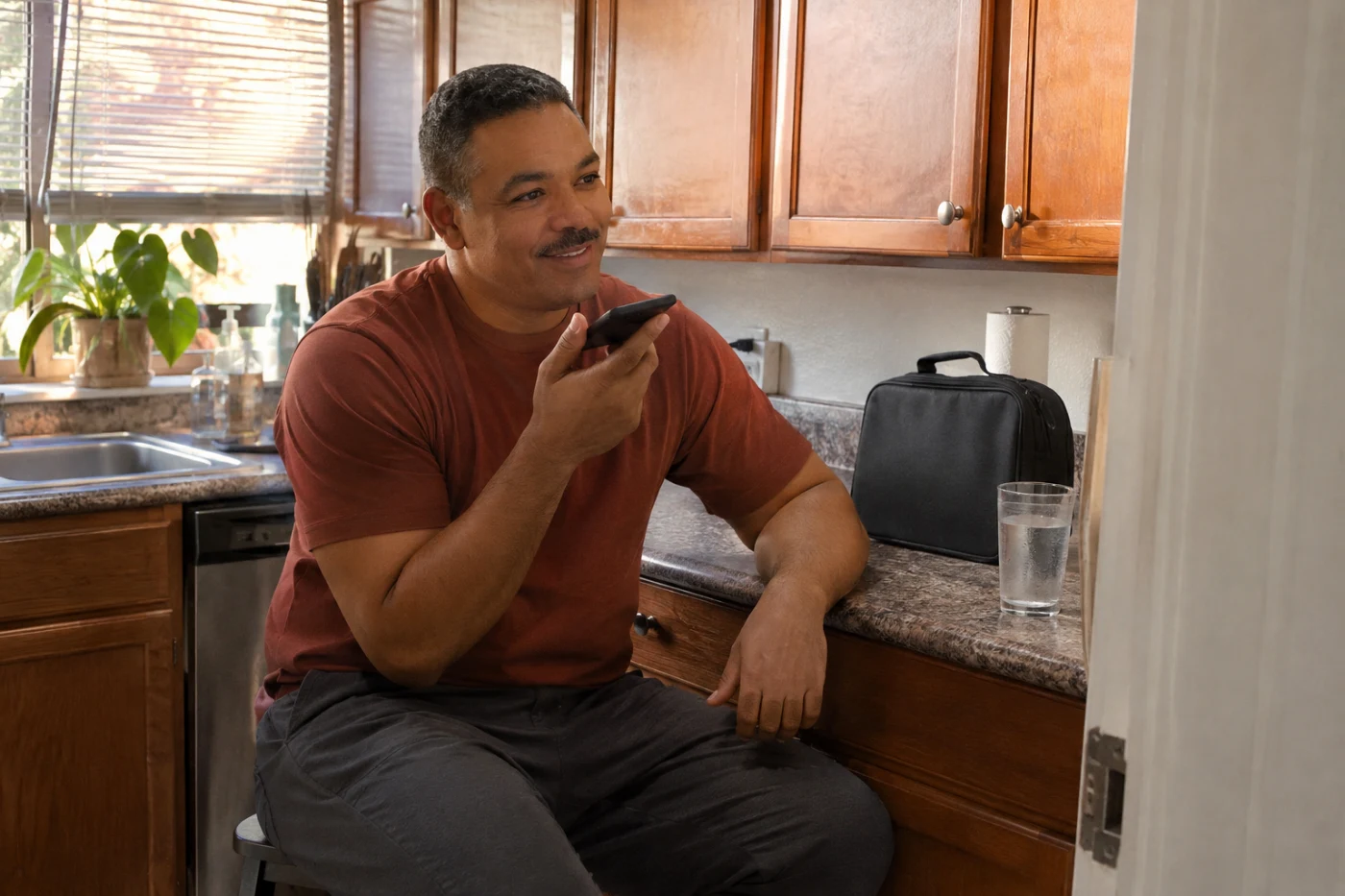
Choose the channels you both find comfortable. One person may enjoy voice notes and another may find them difficult to play at work. Agree on what deserves a call, what can wait in a message and how to ask for a conversation about something important.
For ideas about what to explore together, use the separate guide to long-distance relationship questions. Keep your routine light enough that a call still has room for a story, laughter or a quiet moment.
Decide what happens when a call cannot happen
A useful routine includes an ordinary way to change it. Agree to send a brief message when possible and suggest another window, rather than leaving the other person waiting through an entire evening.
You could adapt: “My shift has run late, so I can't make our call. Could we try tomorrow at the same local times?” The message names the change and offers a next step. It does not require a long explanation or proof of where you are.
Discuss what silence means during sleep or work, too. If you usually answer after a shift, say so. A read receipt is a poor substitute for that conversation. Agree on a separate way to flag a time-sensitive practical message without using urgency for every missed reply.
Repeated missed calls are worth discussing directly: “The last two plans didn't work. Is this time still realistic, or has something changed for you?” Listen to the answer and decide together what you are willing to try next.
Move a misunderstanding out of the message thread
A short reply can leave room for several interpretations. Before answering the version that worries you most, ask what the person meant: “When you said we could talk later, did you mean tonight or another day?”
If the subject matters and messages are making it harder, arrange a voice or video conversation when you can both pay attention. Name what you noticed, how it landed and what you need to understand. Let the other person explain without turning the call into a trial.
You can pause a difficult conversation and agree when to return. A pause works better with a return time than with an open-ended disappearance. Neither person needs to stay awake indefinitely to finish a disagreement.
Try a rhythm, then review it together
Use Our communication rhythm below to choose your next two call windows, label both dates and local times, and agree on messages and missed calls. The PDF is a small working agreement you can put beside your calendar, rather than another collection of conversation prompts.
Try it for a week, then ask: Which part felt easy? Who had to stretch too far? What would we change next week? Keep what works and adjust one thing at a time. A new job, family commitment or travel plan can require a new agreement without making the earlier one a failure.
In my work, a private introduction is a beginning: you still need room to discover the person and the life on the other side of the screen. If you would value personal guidance during that beginning, explore how the introduction journey works. Whatever route brings you together, choose a rhythm that leaves space for both lives.
Something to use today
Our communication rhythm.
Put two call windows in both local dates and times, then agree what messages and missed calls mean.
Choose a week and name both cities. Confirm the conversions together, especially around clock changes.
A little clarity for your next step.
Explore the personal introduction process
Mélih
I bring foreign men and Filipina women together through private introductions and personal guidance. Get to know me.