Before you begin
I am learning Tagalog and Bisaya myself. I still make pronunciation mistakes, and I note down expressions as I go. What I enjoy is the small moment when a word stops being something I have memorised and becomes something I can actually understand.
You do not need to know a hundred romantic phrases to begin. One expression, understood and used with care, can be a good place to start.
Say the simple phrase, and leave room for her answer
Mahal kita is a direct expression of love. If someone says it to you and you feel the same, Mahal din kita means “I love you too.”
If you like someone but are not ready to say you love them, Gusto kita means “I like you.” These are different messages. It is better to choose the one that is true than to use the strongest line because you found it in a list of romantic Tagalog phrases.
The FilipinoPod101 lesson on liking and loving teaches these expressions together. That distinction is useful when your vocabulary is still small: learning a phrase includes learning what you are saying to another person.
Hear the phrase before trying to perfect it
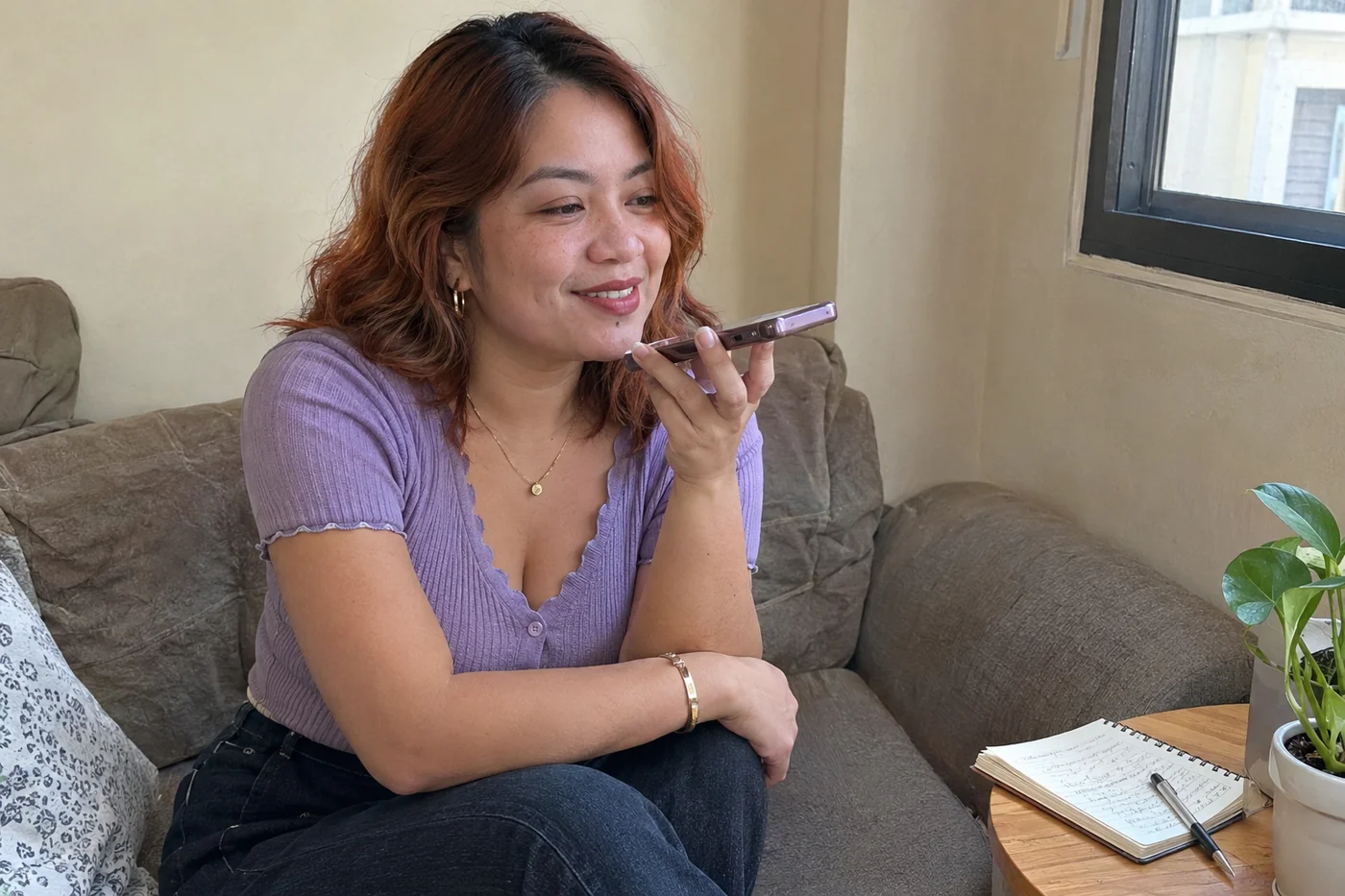
Start with the spoken lesson or ask your partner to say the expression at her normal pace. Then ask her to repeat it more slowly if you need that. Listen, try it once and give her a chance to correct you.
I would avoid treating an English spelling of the sounds as a substitute for hearing them. A short voice example gives you something real to imitate. The linked lesson is a useful starting point; your partner can tell you how the phrase sounds in her own voice.
A simple request is enough: “Could you say that slowly once? I want to learn how you say it.” You can ask whether she is comfortable sending a voice note that you keep for practice. Make that a request, rather than an expectation that she becomes your language teacher.
If she laughs at a pronunciation mistake, ask what sounded funny instead of assuming she is making fun of the effort. If she is busy, save the language question for later. Learning can be warm and playful without becoming a test either person has to pass.
Choose words that fit your stage of the relationship
Saying something in a different language does not remove its meaning. If you have only just started talking, do not use an expression of love as a clever opening line and then act surprised that it sounds serious.
You can say, in English, “I have been learning a little Tagalog. What would you be comfortable teaching me?” That leaves room for affection to grow at a pace both people recognise.
A romantic phrase is not an agreement about exclusivity or the future. Those questions still need a conversation in words you both understand. If you are thinking about what you want from the relationship, my intentional-dating guide can help you prepare that discussion.
Nor does saying “I love you” create an obligation to hear it back immediately. Let the other person answer honestly. Learning her language should add care to the exchange, rather than make it harder for her to be clear.
Ask about terms of endearment instead of assigning one
You may come across mahal as an affectionate way to address a loved one. Ling’s guide to Tagalog expressions of love includes its use as a term of endearment. But a list of Tagalog terms of endearment cannot tell you which name an individual person would enjoy.
Ask: “Do you like being called that, or is there something else you prefer?” Also check whether a nickname is comfortable in public or only between you. You can ask the same question about an English nickname.
Let her choose how she is addressed. Do not turn her name into a new nickname without checking, or assume that a pet name you heard in a video belongs in your conversation.
You may also see Iniibig kita in romantic writing. FilipinoPod101 describes this expression as more associated with songs and poems. Knowing it can help you understand something you hear; you do not need to make it your everyday line.
Make room for the language she actually uses
Before building your whole practice routine around Tagalog, ask which language she uses with the people closest to her. My own interest in both Tagalog and Bisaya has made me more careful about asking that question.
“Which language feels most natural to you?” is a better starting point than deciding for her. She may want to speak English with you, share another language, or use different languages in different parts of her life.
Follow her answer. If she offers a phrase in a language you do not know, write down what she says it means and the situation in which she would use it. Keep the meaning attached to the words. Do not label everything you learn in the Philippines as Tagalog.
Keep one expression you can actually use
The free pocket practice card below contains the three everyday expressions from this guide, with their meanings. It also gives you space to choose one, note when you would use it and add a correction or preferred nickname with your partner’s permission.
Use it for a short practice session, then put it away and return to the conversation. You are trying to understand a person, not collect phrases. If the call becomes a lesson every time, ask what balance she would enjoy.
For a simple way to spend time together without making language practice the whole evening, choose an activity from the long-distance date-night guide.
Start with something true. Listen to how she says it. Let a small effort become a shared moment, rather than a performance you have to get right.
Something to use today
A few words, meant with care.
Keep three verified everyday expressions handy, then personalise one short language-practice moment.
Choose a phrase you mean, listen to the linked lesson and note a correction or preferred nickname only if your partner wants to share one.
A little clarity for your next step.
Explore the personal introduction process
Mélih
I bring foreign men and Filipina women together through private introductions and personal guidance. Get to know me.